Free shipping Pan-India · Frames starting at ₹1,199. · 7 Days Return Policy
Free shipping Pan-India · Frames starting at ₹1,199. · 7 Days Return Policy
Free shipping Pan-India · Frames starting at ₹1,199. · 7 Days Return Policy
Free shipping Pan-India · Frames starting at ₹1,199. · 7 Days Return Policy
Free shipping Pan-India · Frames starting at ₹1,199. · 7 Days Return Policy
Free shipping Pan-India · Frames starting at ₹1,199. · 7 Days Return Policy
Free shipping Pan-India · Frames starting at ₹1,199. · 7 Days Return Policy
Free shipping Pan-India · Frames starting at ₹1,199. · 7 Days Return Policy
Free shipping Pan-India · Frames starting at ₹1,199. · 7 Days Return Policy
Free shipping Pan-India · Frames starting at ₹1,199. · 7 Days Return Policy
Account
Frame Finder · By Face Shape
Sunglasses for Diamond Face Women
Width at the brow, softness at the cheek — the rarest face shape, and the one cat-eye frames were made for.
Width where your face is narrowest
A diamond face is narrow at the forehead, widest across high cheekbones, and narrow again at the chin. It is the rarest of the face shapes and the most striking, and it wants the opposite of what most guides assume: not less width, but more — placed high, at the brow.
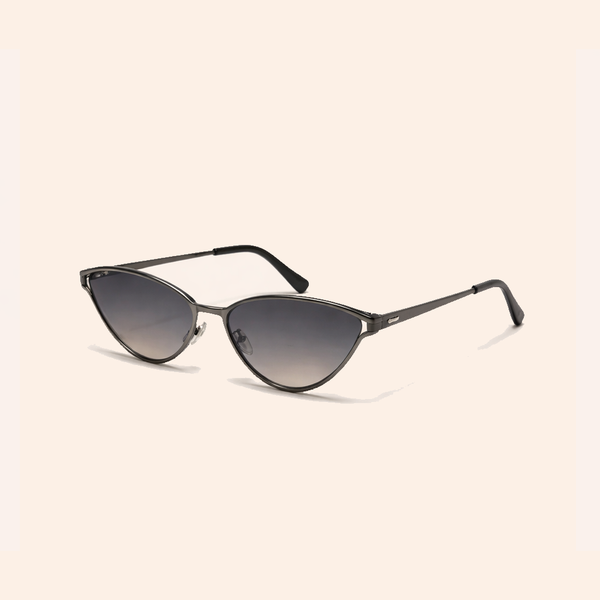
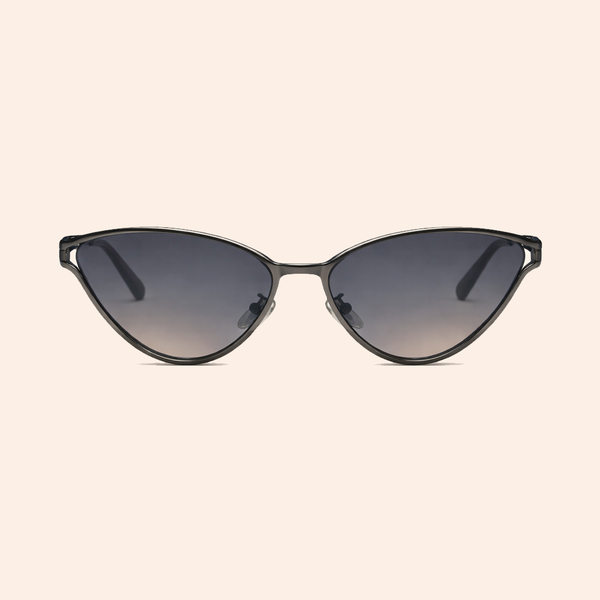
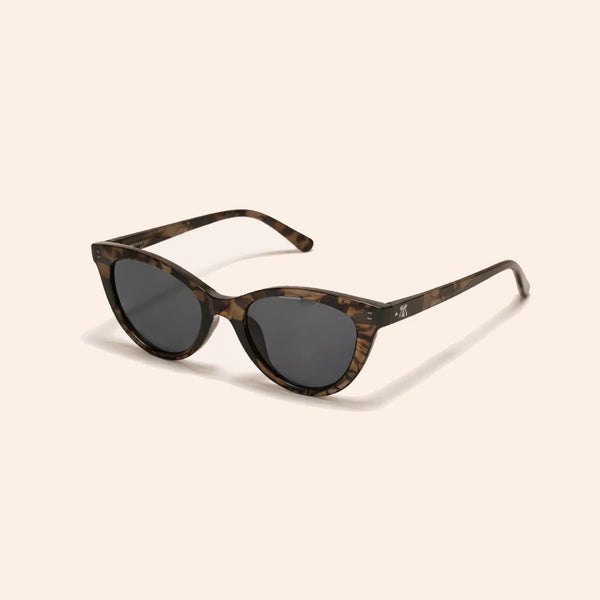
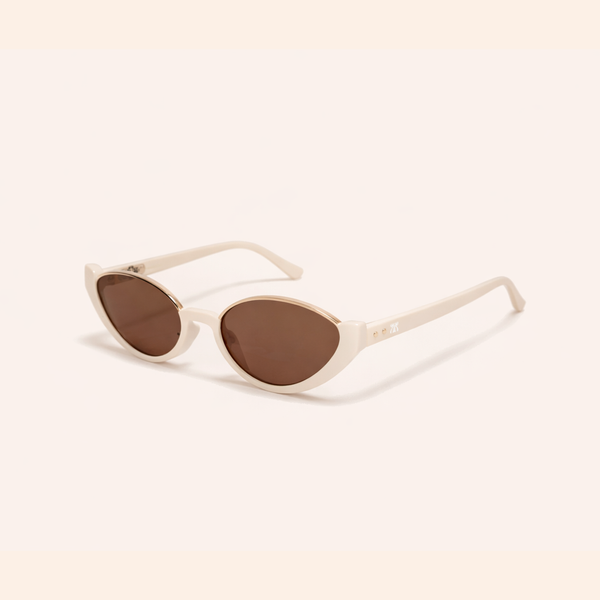
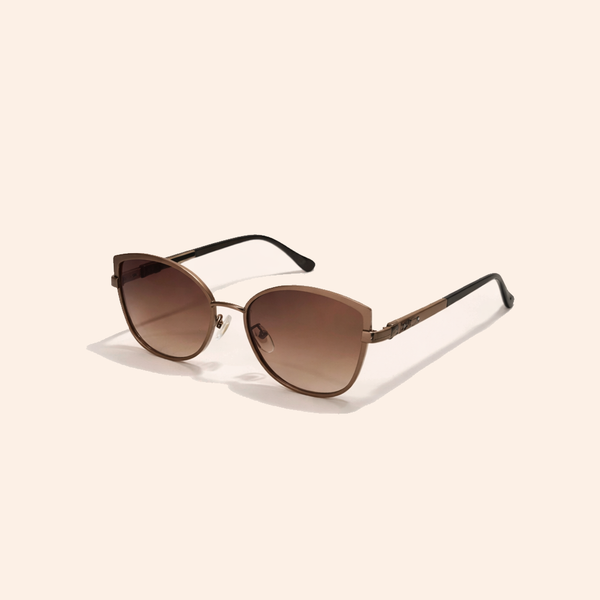
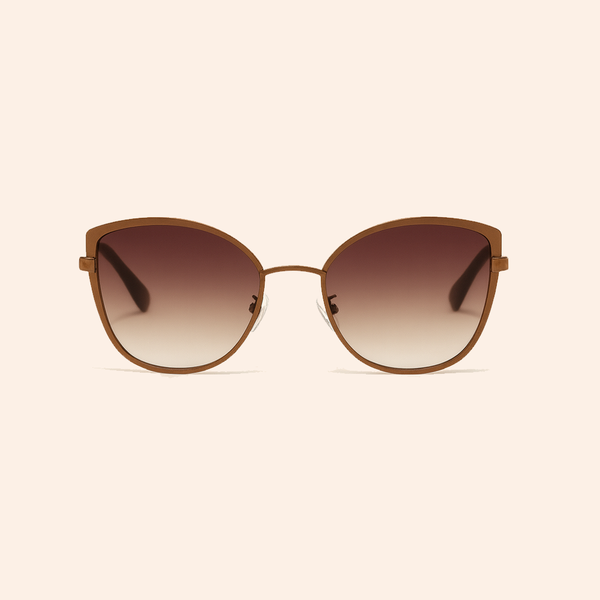
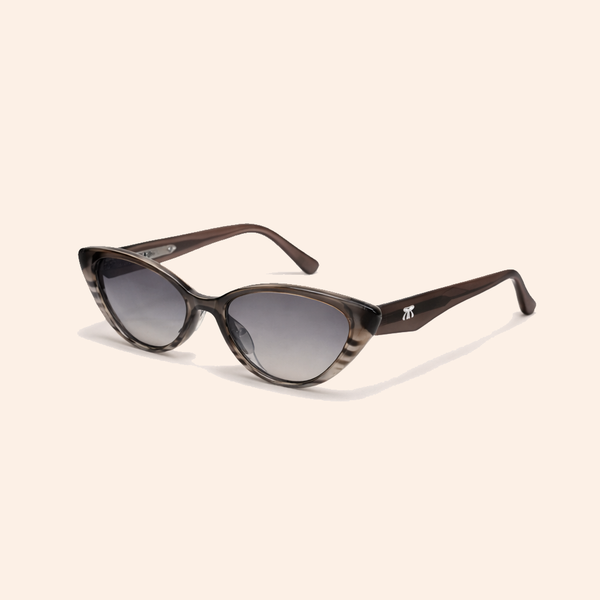
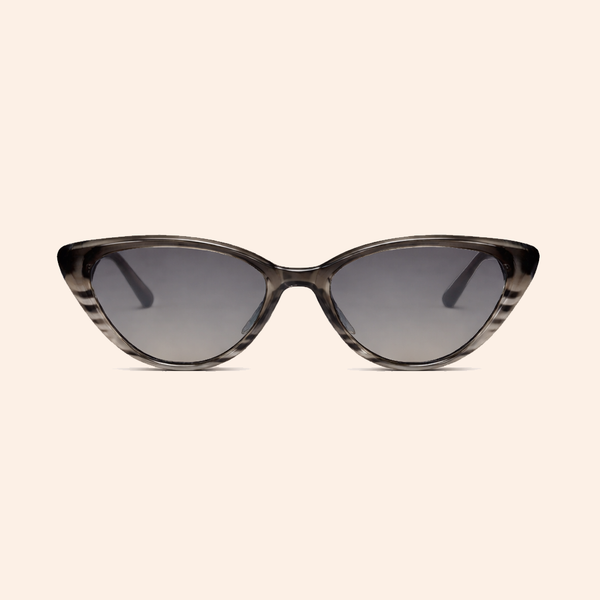
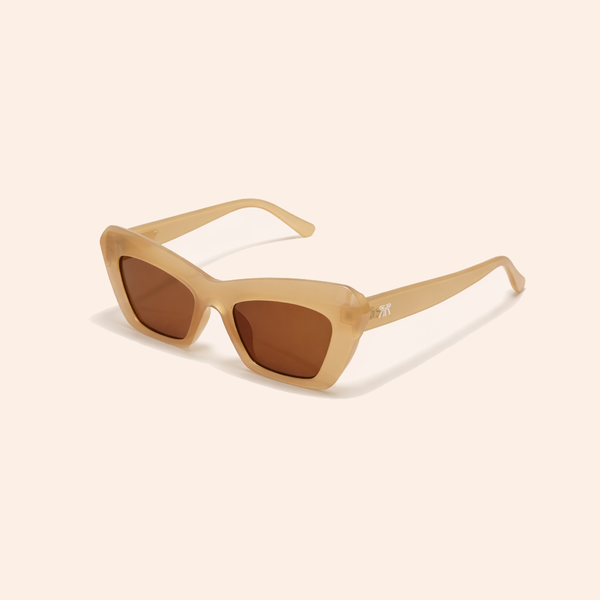
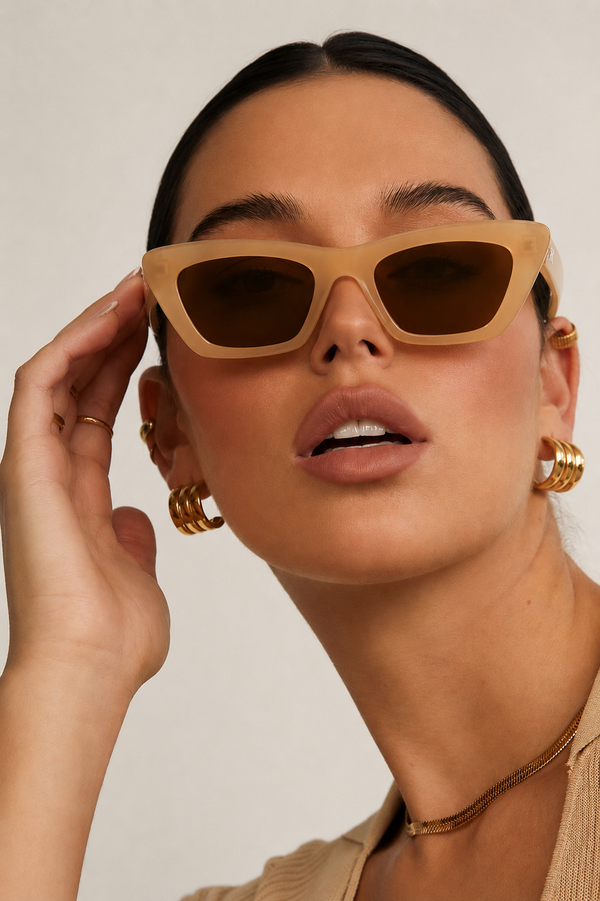
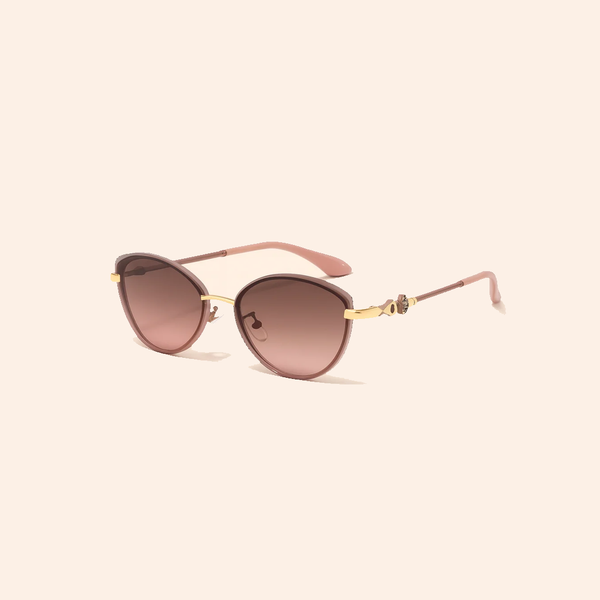
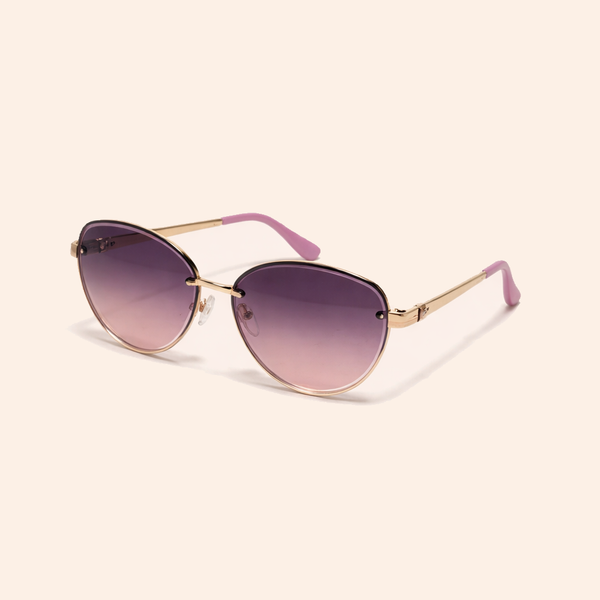
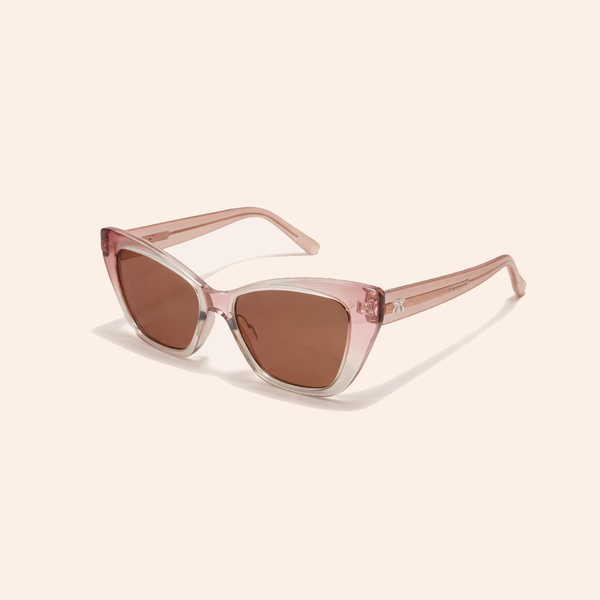
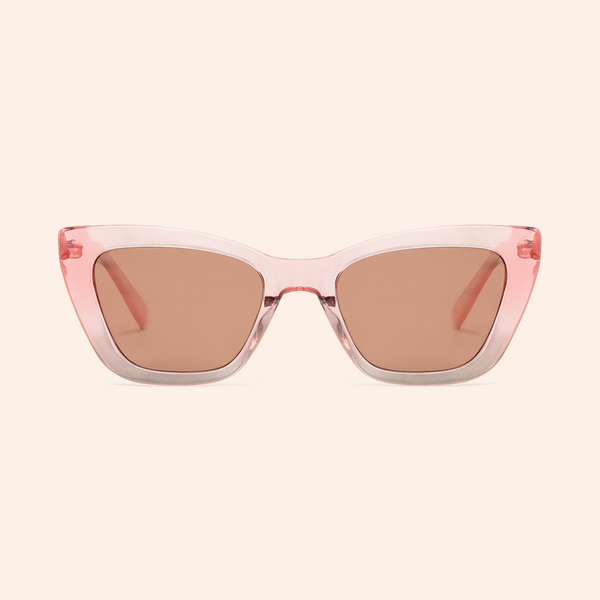
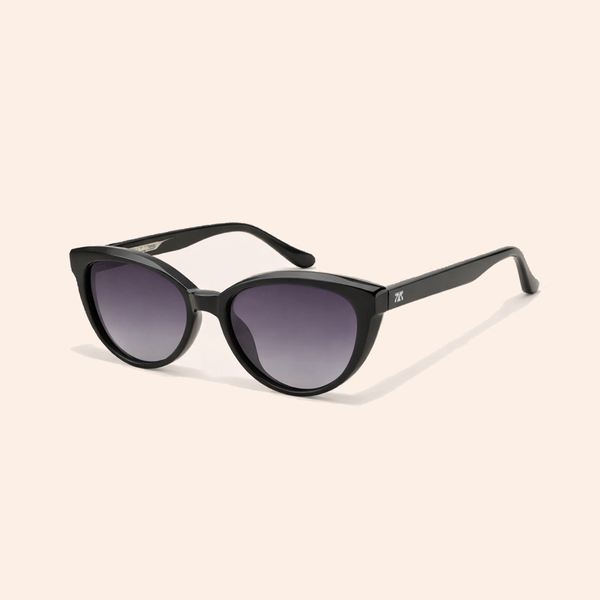
That is why cat-eye frames lead this edit. The upswept corner adds width exactly where a diamond face has least, and lifts the eye off the cheekbone. All UV400. Not sure of your shape? Take the 60-second Frame Finder quiz.
Both narrow to the chin, so they get confused constantly. The difference is the forehead: a heart face is widest there, a diamond face is narrowest. Six quick questions and the Frame Finder settles it.
Approach with care: Narrow frames make high cheekbones read wider by contrast, and boxy styles whose widest point lands right on the cheekbone add width where you already have it. If a pair looks slightly off, one of those two is usually why.
The guide
How to choose sunglasses for a diamond face
Diamond is the rarest face shape, and the one most often mistaken for a heart face. It is also the only shape where a heavy brow line is an advantage rather than something to avoid — which is why the usual advice, borrowed from other face shapes, so often gets it wrong.
How to tell if you have a diamond face
Pull your hair back, face a mirror, and check three things:
Your cheekbones are clearly the widest point — high, defined, and wider than both the forehead and the jaw.
Your forehead is narrow. This is the detail that decides it.
Your chin narrows to a point, and the face is a little longer than it is wide.
Diamond is the rarest face shape and the one most often mistaken for something else — almost always a heart face, because both narrow to a pointed chin. The forehead separates them: a heart face is widest at the forehead, a diamond face is narrowest there. That single difference reverses the frame advice completely, so it is worth two seconds in the mirror.
The principle: widen the brow, soften the cheek
The fit details that decide it
Shape matters less here than placement. Two frames of identical shape can sit completely differently on a diamond face depending on how high they perch and how much weight the top rim carries.
What to check
Look for
Why it matters
Browline
Bold, detailed or contrasting
Adds width at the narrowest part of your face
Where the frame sits
High on the face
Draws the eye to the brow rather than the cheekbone
Total frame width
Level with your cheekbones
Matching — not exceeding — keeps the mid-face from widening further
Lens shape
Curved or gently upswept
Softens the angle where the cheekbone turns
Lower rim
Light, thin or rimless
Keeps weight off the widest line of your face
Best frame shapes for diamond face women
Cat eye — the strongest match by some distance
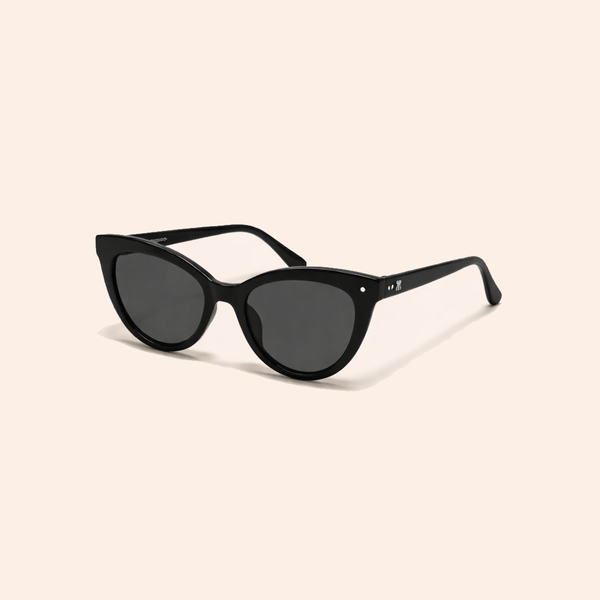
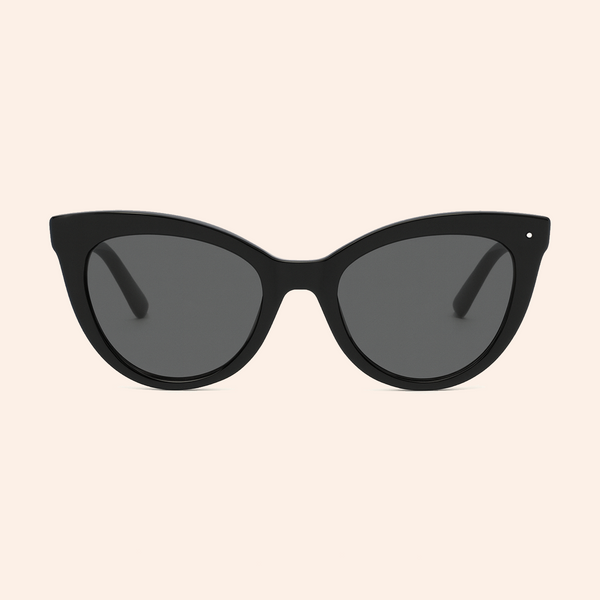
No other shape does the job as directly. The upswept outer corner puts width at the brow line, the sweep itself lifts the eye upward and away from the cheekbone, and the curve softens the angles at the same time. If you buy one pair on this page, make it a cat-eye. The whole edit above is built from them; the wider range is in cat-eye sunglasses for women.
Oval and rimless
The gentle option. An oval frame has no corner to land on your cheekbone, and rimless styles put no weight there at all. Both work best when the frame still sits high — a light frame low on the face loses the advantage.
Round
A full circle fills out a narrow forehead and rounds off the high angles of the mid-face in one move. Choose a size that reaches your cheekbones rather than stopping short of them. Shop round sunglasses for women.
Hexagon and browline styles
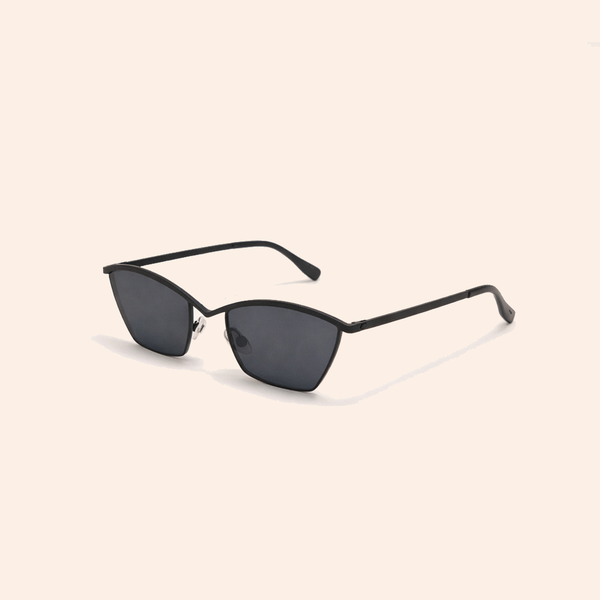
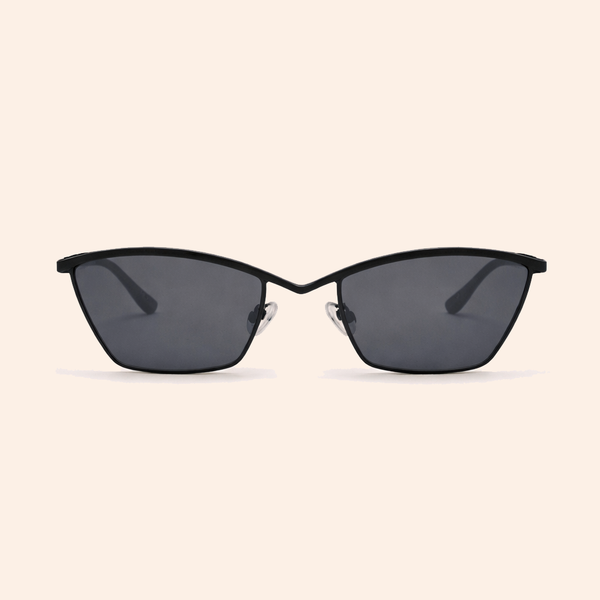
Any frame with a strong, flat top edge widens the brow, which is the whole objective. Hexagons do it with a defined upper line while keeping the lower half light — close to the ideal weight distribution for this face shape.
Shapes to approach with care
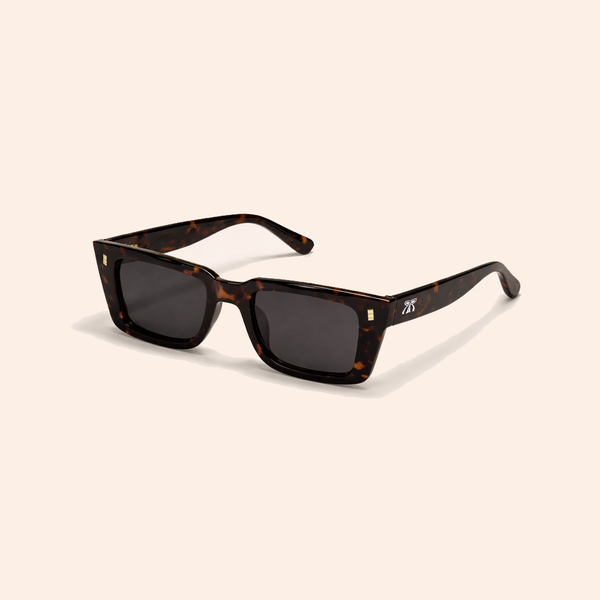
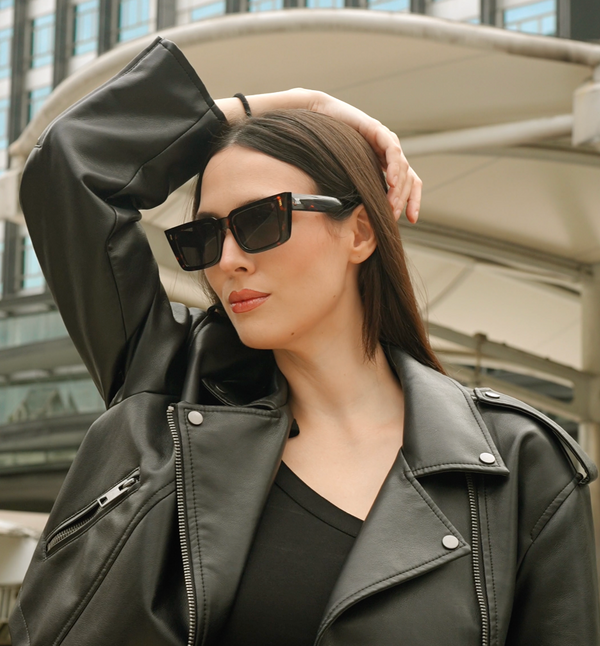
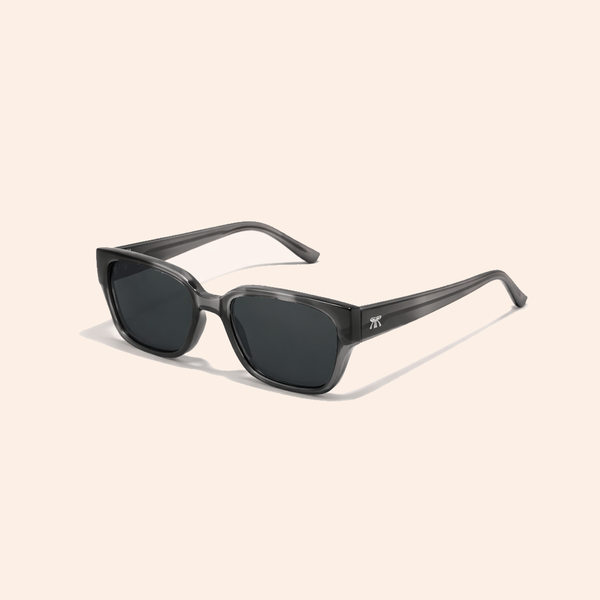
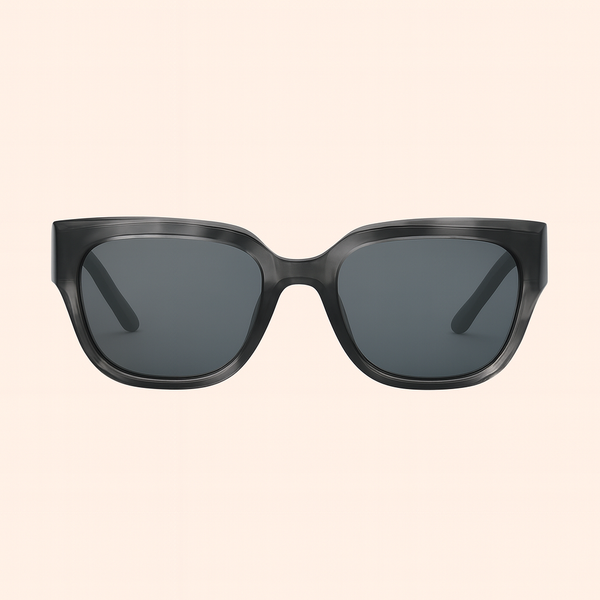
Narrow frames are the main trap. Anything that finishes well inside your cheekbone width makes the cheekbones read wider by contrast — the opposite of what you want. Boxy frames are the second: their widest point tends to land right on the cheekbone, adding width to the one place that already has it. Neither is forbidden, but both fight the shape.
Colour, and where to put it
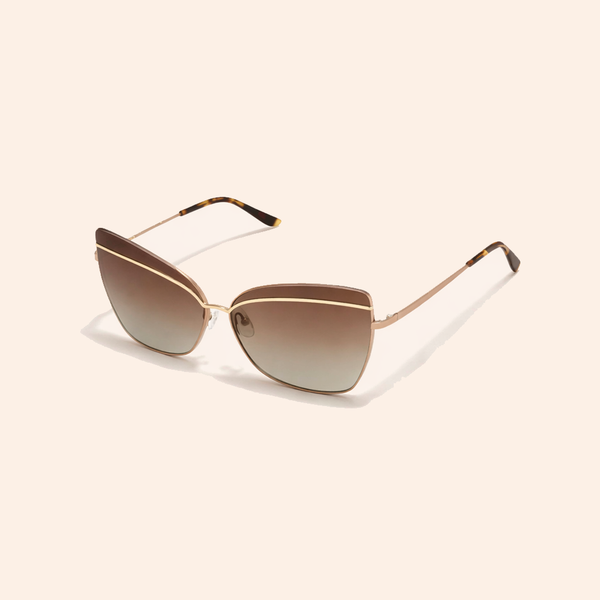
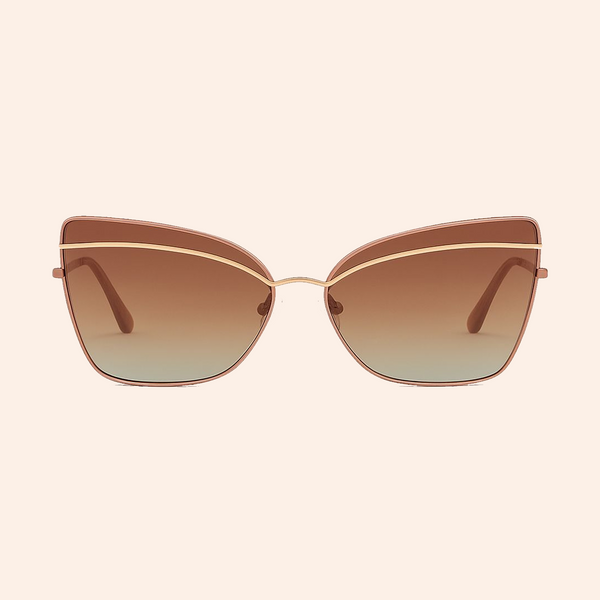
Colour is a placement tool here. A frame with a darker or more decorated top rim and a lighter base does the widening for you without any change of shape — two-tone and gradient frames are quietly ideal for a diamond face. If you want a single colour, black in a cat-eye still reads as a strong brow line. Metallic detail along the top corner works the same way at a smaller scale.
Styling notes
Volume at the temples helps — a fringe, side-swept layers, anything that gives the forehead the width your frames are also supplying. Hair pulled flat and tight off the face does the reverse and leaves the cheekbones carrying everything. For weddings and daytime events a cat-eye with detail along the top corner is the pair that photographs best, because the camera reads that top line as brow width.
Diamond Face Sunglasses — FAQs
Cat-eye frames, by some distance. The upswept corner adds width at the brow — the narrowest part of a diamond face — and lifts the eye away from the cheekbone. Oval, round and rimless frames also work well because they put no hard corner on the cheekbone.
Look at your forehead. Both shapes narrow to a pointed chin, but a heart face is widest at the forehead and a diamond face is narrowest there, with the cheekbones taking over as the widest point. The frame advice reverses completely between the two, so it is worth checking.
Yes — this is the one face shape where a strong browline is an asset. Weight, colour or detail along the top rim adds width to a narrow forehead. On a heart face the same frame would be a mistake, which is a good illustration of why face shape advice is not interchangeable.
Narrow frames, which make high cheekbones read wider by contrast, and boxy frames whose widest point lands directly on the cheekbone. Both add emphasis to the part of the face that already has the most width.
Yes. A full circle fills out a narrow forehead and softens the high angles of the mid-face at the same time. Pick a size that reaches your cheekbones rather than stopping short of them.
Level with your cheekbones — matching, not exceeding. Going wider adds width to the part of your face that is already widest, and going narrower makes the cheekbones stand out more by contrast.
It is the least common of the standard face shapes, which is part of why so much generic advice misses it — most guides borrow their recommendations from heart or oval faces, and those rules do not transfer.
Yes. Every pair in this collection is UV400 — blocking 100% of UVA and UVB rays — and ships with a hard case and cleaning cloth, with a 7-day return window.